
Flybi / Services / Counter-UAS
Service · Counter-UAS
The perimeter moved up.
Detection, classification, tracking and mitigation of unauthorised drones over refineries, power plants, defence installations, airports and strategic industrial assets. Multi-sensor stack, trained operators, and a clear response protocol — on the ground, on call, and on your side.
The problem
The threat is above the fence now. Your security is not.
Perimeter fencing, CCTV, and manned patrols were designed for a ground-based threat. A ₹40,000 consumer drone ignores every one of them. It photographs your plant, drops a payload, or crashes into a turbine — and the first you hear about it is when you watch the footage on social media.
The right answer isn't a single gadget. It's a layered detection stack, a trained operator, and a rehearsed response.
The solution
A detection stack that sees early, classifies correctly, and triggers the right response.
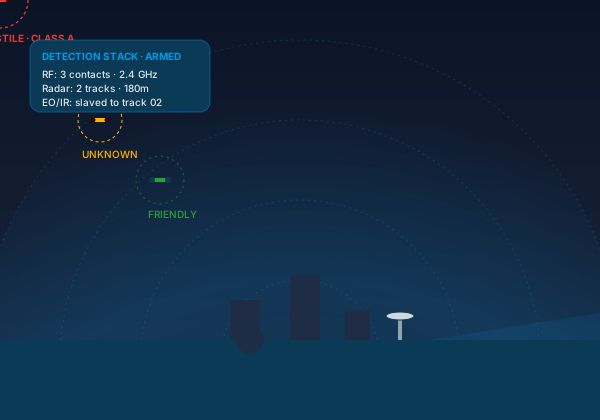
- RF detection. Passive RF sensors identify commercial drone controllers out to several kilometres — before they enter the restricted zone.
- Radar. Purpose-built micro-drone radar resolves small, slow targets that conventional airspace radar misses.
- Acoustic arrays. Directional microphone arrays cross-reference RF contacts and detect radio-silent drones.
- EO/IR tracking. Slewing EO/IR cameras slave to RF/radar cues and provide the human operator with visual confirmation.
- Mitigation. RF-jammer, GNSS spoofer, and (where authorised) kinetic options — commanded from a central console with a logged decision trail.
- Operator training. We don't just install the stack — we train your security team to operate it, and stand up an on-call response team.
What you receive
Deliverables
Not a product, a posture. Detection + classification + response + drill.
Site survey & threat assessment
We map the RF and visual terrain of your site, model the likely approach vectors, and quantify the current blind spots.
Integrated detection stack
Hardware installed, commissioned, and integrated into your SCADA/SOC. Single pane of glass for the operator.
Response SOP
Written procedure per threat class, with decision tree, authorised response, escalation path, and legal framework.
Training & drills
On-site training for your security team, plus quarterly drills against simulated threats to keep readiness honest.
How it runs
A clean four-stage engagement
- AssessTwo-day site survey + threat modelling. No hardware yet — just the ground truth about what you're exposed to.
- DeployPhased rollout of sensors; integration with your existing SOC. Typical go-live: 6–10 weeks.
- TrainOperator training plus tabletop exercises with your security lead and local authorities.
- SustainMonthly sensor health checks, quarterly drills, annual threat re-assessment.
Already had an overflight you can't explain?
Tell us the site and the incident. We'll send back a threat-posture assessment — no hardware pitch.