
What we pitched.
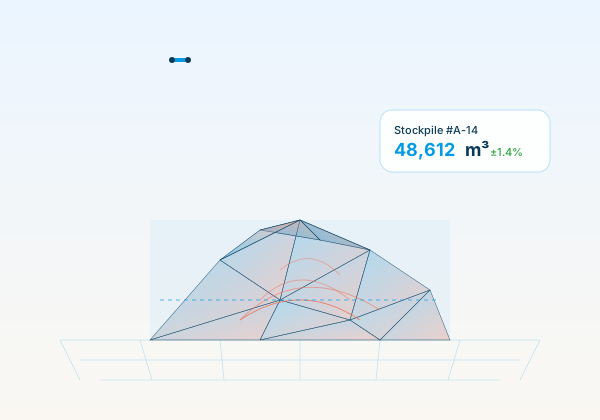
We walked in with our best-looking deck: drone-borne stockpile surveys at ±1.5% accuracy, 48-hour turnaround, nine industrial reference clients. The CFO — a sharp, time-compressed person — let the deck run for three slides, then stopped us.
What she asked.
"I don't care about ±1.5%. I care whether my auditor will accept this number without a qualified opinion, whether my plant intake reconciles against it month-on-month, and whether my internal controls team can defend the methodology in a dispute. Your deck doesn't answer any of those."
She thanked us and stood up. We lost the meeting, in the sense that she didn't sign anything that day.
What we learned.
The ICP wasn't "someone who wants accurate stockpile volumes." The ICP was "a CFO who has signed off on a stockpile number in the last twelve months and is now worried about doing it again next year." Accuracy was a feature, not the purchase driver. The purchase driver was defensibility.
What we changed.
Three specific things, in the week after:
1. Every proposal now leads with a one-page chain-of-custody annex — how the data was collected, who collected it, what the calibration record looks like, and how the methodology is documented for audit purposes.
2. Every stockpile engagement now includes a standing offer: reconcile against your weighbridge and your books, free, for the first two reporting cycles. The reconciliation is what builds the CFO's trust, not our accuracy number.
3. We hired one more person. Not a pilot, not an engineer — an internal audit specialist. She reviews every deliverable before release. Her job is to ask: would I sign off on this if it crossed my desk during an audit?
The follow-up.
We went back to the same CFO six weeks later with a one-page annex and a reconciliation offer. She signed. The lesson wasn't about the pitch. It was that we'd been selling the feature set we were proud of, not the outcome the buyer was buying.